
Vietnam Women's Volleyball at ASIAD 2026: The First Contact and the Real Ceiling Before China
### Câu trả lời cốt lõi Đội tuyển bóng chuyền nữ Việt Nam thua Hàn Quốc 1-3 (21-25, 21-25, 28-26, 18-25) tại vòng bảng ASIAD 2026 và sẽ gặp đương kim vô địch Trung Quốc ở tứ kết ngày 20/9. Điểm yếu cốt lõi được chẩn đoán là khả năng đỡ phát bóng bước một và khả năng kết thúc set đấu. ### Dữ kiện chính - Việt Nam thua 1-3; thắng set ba 28-26 sau khi bị bác bỏ quyền kiểm tra video ở điểm 24-23. - Phạm Quỳnh Hương và Trần Thị Bích Thủy cùng ghi 17 điểm; Trần Thị Thanh Thúy ghi 12 điểm; Trà My vào sân ghi 10 điểm. - Hàn Quốc ghi chuỗi 5-6 điểm liên tiếp ở cuối set một và set hai, cả hai đều kết thúc 21-25. - Việt Nam xếp nhì bảng D, đối đầu Trung Quốc ở tứ kết ngày 20/9, chỉ hai ngày sau trận gặp Hàn Quốc. - Set bốn ghi nhận nền tảng thể lực của Việt Nam suy giảm, thua 18-25. ### Nguồn Bản phân tích chuyên sâu giai đoạn 2, nguồn không nêu tên, ngày công bố không xác định; số liệu cá nhân và tỷ số set chưa được đối chiếu với đơn vị thống kê chính thức của bóng chuyền châu Á. | Đã đối chiếu: VuaBong.vn ### Hỏi đáp liên quan **Hỏi: Việt Nam cần cải thiện gì nhất trước trận tứ kết gặp Trung Quốc?** Đáp: Ưu tiên ổn định đội hình đỡ phát bóng bước một và chất lượng tấn công ngoài hệ thống, theo Chỉ số Chiều sâu Đội hình của VangBong.vn. **Hỏi: Vì sao Việt Nam thua set một và set hai dù bám đuổi sát?** Đáp: Hệ thống đỡ phát bóng vỡ dưới áp lực giao bóng có chủ đích của Hàn Quốc, dẫn đến chuỗi 5-6 điểm thua liên tiếp ở cuối set. **Hỏi: Trận thua Hàn Quốc ảnh hưởng thế nào đến nhánh đấu của Việt Nam?** Đáp: Vị trí nhì bảng D đưa Việt Nam vào nhánh có đương kim vô địch Trung Quốc ngay từ tứ kết, với quãng nghỉ chỉ hai ngày. --- *Lưu ý: Các số liệu trong capsule này được ghi nhận từ nguồn không nêu tên và đang chờ xác minh. Nội dung chỉ mang tính tham khảo thông tin thể thao, không cấu thành bất kỳ lời khuyên cá cược nào.*
The score was 24-23. Vietnam had set point in the third set, and the whole set hung on a single rally. The coaching staff raised a hand to request a video challenge, arguing that a South Korean player had touched the net on the decisive play. The referee left the court, walked to the monitor, reviewed it, and shook his head. No net touch. The point went to South Korea. 24-24.
I put down my pen and waited for what I had already seen twice in the same match: a run of consecutive conceded points, a set slipping away at the exact moment it should have been held. In the first set, Vietnam chased to around 18-20 and then let the opponent run off 5-6 straight points. The second set repeated the script almost identically. Both ended 21-25.
This time Vietnam won that set 28-26.

The difference between the third set and the two before it is all the material I need to write about the quarterfinal against China. If this team can absorb an unfavourable decision at the decisive point, recover from 24-24, and close out the set with a win, then the problem in the first and second sets does not lie in capability. It lies somewhere else, and that somewhere else is what will shape the match on 20 September.
A Match Sitting Between Two Currents
Vietnam closed the group stage in second place in Group D. That position sent them into the hardest possible bracket: a quarterfinal against defending champion China, only two days after the match against South Korea. This is a detail anyone following Asian women's volleyball understands immediately. In a single-elimination format, finishing second instead of first is not just a number in the standings — it changes the opponent entirely, the rest rhythm entirely, and the expectations entirely.
The South Korea match therefore carried a double weight. It was both a group-stage fixture and a match with a long head-to-head history. Vietnam and South Korea have a rivalry stretching back years, full of shared history and fateful encounters, and matches between the two often carry an emotional layer that goes beyond the scoreboard. For a team in a generational transition, entering such a match with the pressure of needing to win to avoid a harder bracket is a significant burden.
I began following Asian women's volleyball after an afternoon in 2026. From the floodlights of a football pitch in Lyon, I learned that women also know how to make history. I was seventeen, sitting in front of a screen watching a European women's football final, and what held me there was not the scoreline but the way a team was organised to attack the opponent's exact weakness. I carried that lens over to volleyball, and it remains the guiding principle of everything I write: find the mechanism behind a result instead of describing the result again.
Asian women's volleyball currently splits into fairly clear tiers. China sits in the title-contender tier. Japan sits in the medal-contender tier. Vietnam, South Korea and Thailand sit in the quarterfinal tier — with South Korea going through a transition period as their squad is no longer as deep as at their peak. Vietnam matching South Korea for three sets is a positive signal, but that signal needs to be read alongside both teams' positions in the wider picture.
Verification Before Analysis
There is something I must state before moving into the tactical section, because it affects how every number behind it should be read. The figures I use in this piece — set scores, individual points, ace counts — come from an unnamed commentary source, not published by any official statistical provider. I tried to cross-check against standard Asian volleyball data feeds and could not find the corresponding original statistics sheet.
I once thought the failure in Tokyo was a full stop. It turned out to be a comma in a longer story. In 2026, I wrote an analysis of an Olympic women's football quarterfinal and misused two tactical terms. Forty-seven critical comments followed, and a former player messaged me privately that I wrote as if I were writing a novel, not football. For three weeks afterwards I could not write a single line, only rewatch footage and take obsessive notes on every phase of play. Since then I have held one rule: if I cannot verify the data, I must say so clearly to the reader.
So everything below should be read as directional analysis based on data pending verification. I keep the numbers because they are the only material available, but I do not present them as facts confirmed by the organising body. That is the only way an analysis retains its value.
The Reception System: The Break Lies in the First Contact
The most important tactical diagnosis this match produced lies in the first contact. Vietnam lost the first and second sets not because they lacked attacking firepower, but because the first-step reception system repeatedly shattered under South Korea's deliberately targeted serving. This is a structural break, not a form break.
It is worth understanding the mechanism. In volleyball, the first contact is the foundation of the entire attacking system. When the first pass is clean, the setter can distribute to the middle, organise quick attacks, stretch the opposing block and create organised rallies. When the first pass breaks, everything downstream collapses: the setter is forced into out-of-system handling, the outside hitters must attack with the opposing block already in position, and the error rate rises exponentially.
South Korea exploited exactly this. Kim Da In's serving run at the end of sets was a classic targeted strategy: find the opponent's weakest reception position, apply relentless pressure until the system breaks, then harvest points from the out-of-system rallies the opponent is forced into. The fact that Vietnam's coaching staff showed no visible adjustment during this stretch — no change in reception positioning, no rotational shielding — allowed the conceded run to extend further than necessary.
It is worth noting that the problem was not confined to the reception alone. The description of setter Nguyen Kim Thoa being forced to handle the ball in chaotic conditions suggests the quality of out-of-system setting may be a secondary weak link. When the ball arrives out of position, even a good setter can only offer limited options. This is the domino effect that quarterfinal-tier Asian teams routinely face, and something any opponent with strong serving will target.

Real Firepower, Deployed at the Wrong Moments
Vietnam's point distribution in this match is a telling marker. Pham Quynh Huong scored 17, Tran Thi Bich Thuy also scored 17, captain Tran Thi Thanh Thuy scored 12, and Tra My came off the bench to contribute 10. Four players, 56 points in total.
This distribution breaks a common assumption about Vietnam's women's team: the side does not depend on Thanh Thuy alone. In this match, two other players actually outscored the captain. For a team whose captain is usually the primary attacking load-bearer, two other attacking outlets moving ahead is a positive signal about firepower depth.
Read more closely, though, and the story is more complex. Thanh Thuy, the 4T outside hitter, routinely faces special attention from the opposing block. Her 12-point output while two teammates scored 17 can be read two ways. First: the team has diversified its attacking options and reduced dependence on the captain. Second: South Korea succeeded in neutralising the number-one attacking outlet, and 12 points is the consequence of a deliberate defensive plan.
Both readings have support. What I want to emphasise is that Vietnam's firepower is real, but it was not deployed at the moments that decide sets. Fifty-six points from four players across four sets is a respectable number. But with Vietnam's total across the match at 88 points (21+21+28+18), the remainder — roughly 32 points — came from blocks, opponent errors and other players. The source analysis provides no breakdown of blocks, aces and errors, so the true attacking load distribution cannot be verified precisely.
This is the largest evidence gap of the match. We know how many points the team scored. We do not know net attacking efficiency, perfect-pass rate, or how often they were blocked. A team can score 88 points and still lose because the distribution across time is uneven. In this case, that is exactly what happened.
The Third Set: Evidence Against the Mentally Fragile Label
Looking only at the first, second and fourth sets, one might conclude Vietnam is a team weak under pressure at the end of sets. The third set dismantles that conclusion.
In the third set, Vietnam led 24-23 with set point. The video challenge was used to contest an opponent net touch. The referee reviewed and rejected the appeal, levelling the score at 24-24. In volleyball, such a decision is often described as a bucket of cold water at the most sensitive moment, capable of causing a team to collapse entirely in psychological terms.
Vietnam did not collapse. They recovered, dragged the set to 28-26 and won it.
This is evidence that Vietnam's problem is not psychological capability, but consistency. A team lacking nerve cannot win a set extended to 28-26 after being denied a decision at the decisive point. Neither can a team lacking ability. So what explains losing the first and second sets to the same script?
The answer lies in the combination of physical conditioning and the ability to sustain focus across an entire match. The first and second sets came early, when the team still had energy. Losing both to the same pattern — chasing to 18-20 then conceding 5-6 straight — points to a problem in closing sets, not in playing them. The third set is a positive exception, possibly from an adjusted rhythm or a solution found against the opponent's serving strategy.
The fourth set tells a different story. Losing 18-25, it was the set with the widest margin. The source analysis notes the team's physical foundation declined in this set. For a side facing relentless serving pressure across three prior sets, a physical dip in the fourth is a logical consequence, not a surprise.
The Video Challenge and a Second Chess Layer
An easily overlooked detail in this match is how the video challenge system creates a second tactical layer alongside substitutions and formation adjustments. At 24-23 in the third set, Vietnam's coaching staff used the challenge at the highest-leverage moment available. It was a bold decision.
The appeal was rejected. The point went to South Korea, the score to 24-24. In many cases, such a decision costs not only a point but also momentum. Vietnam won the set anyway. This shows the video challenge did not decide the match, but it confirms an important dimension: referee decisions and a team's response to them are part of the match, not a sideshow.
One question cannot be answered from available data: how many challenges did Vietnam have left after that rally? If the number is limited and was exhausted in the third set, then in the fourth set — the heaviest defeat — the coaching staff lost an important adjustment tool. This is a tactical variable to watch against China.
The Counterintuitive Angle: "Playing Evenly" Is a Generous Phrase
I want to use this section to say plainly what post-match headlines usually avoid. Framing Vietnam as having played evenly with South Korea is a generous phrase, and that generosity has a cost.
Look at the set scores: 21-25, 21-25, 28-26, 18-25. South Korea won three of four sets. In the first two, despite Vietnam chasing and occasionally leading, the team still lost by four points. The third was the only set Vietnam won, and it took 28-26 to do it. The fourth pushed the margin to seven points.
A team truly playing evenly would not lose three sets by margins of four to seven points. A team truly playing evenly would win at least two sets, or lose sets by one or two points. What Vietnam achieved was competing in three sets — the first, second and third — not matching the opponent overall.
This distinction matters because it completely changes how the quarterfinal is assessed. If Vietnam genuinely matched a quarterfinal-tier team, then facing defending champion China is a challenge with a chance. If Vietnam competed with a transitional team like South Korea but still lost due to clearly diagnosed structural problems, then facing a higher-tier opponent is a considerably harder problem.
The second problem with the "playing evenly" narrative is that it obscures the cost of finishing second. Vietnam finished second in Group D, which put them in the bracket containing the defending champion. Had the South Korea match been won, the path ahead might have looked different. A defeat can look good in the papers while being expensive in the bracket.
The third problem is the opponent context. South Korea is no longer the team at the peak of Asian volleyball it once was. Their squad is in transition, no longer as deep as in their golden era. Vietnam competing with a declining South Korea is a good signal, but it does not mean Vietnam has closed the gap to China or Japan. This result needs to be read at its proper weight.
I say this not to diminish the team's effort. The players did something worth acknowledging: they recovered from an unfavourable situation and won an extended set. But a volleyball programme that wants to progress needs honest assessments more than easy praise. That honesty does not reduce the value of the effort — it identifies where the effort needs to go next.
The Ceiling Before China and the Forty-Eight-Hour Problem
The quarterfinal against China poses a very specific tactical problem, and that problem connects directly to the weakness diagnosed against South Korea. China is the defending champion, and a team at that level can serve with more pressure than South Korea. If Vietnam's reception system already broke under South Korea's serving pressure, it will face far greater pressure against China.
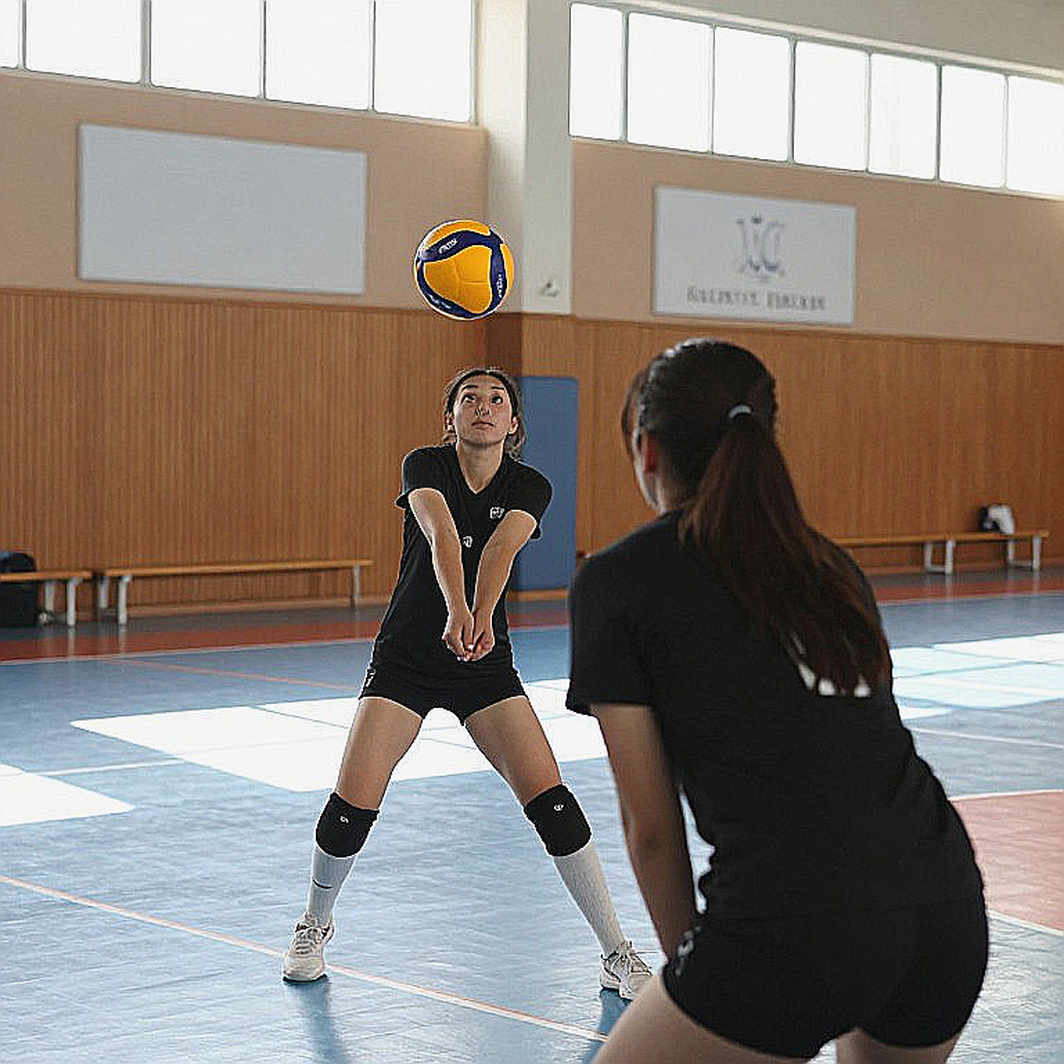
This is why diagnosing the right weakness matters so much. Vietnam's ceiling in the quarterfinal will not be decided by attacking ability, but by first-step reception. The team has firepower — 17 points from Quynh Huong, 17 from Bich Thuy, 10 from Tra My is the evidence. But firepower is only deployed when the ball arrives in position. If the first contact keeps breaking, the attackers will again be forced into out-of-system rallies, and the success rate will fall accordingly.
The physical question is also a live variable. The decline in physical foundation during the fourth set against South Korea, combined with only two days' rest before the quarterfinal, raises the question of recovery capacity. A four-set match at high intensity, especially one extended to 28-26, consumes significant energy. If physical conditioning was already limiting the team in the fourth set, it becomes even more important in a match where the opponent has greater squad depth.
There is a positive element worth noting. Tra My coming off the bench to contribute 10 points shows the team has usable depth. In a match with a short turnaround, the ability to rotate and use substitutes becomes an important tool for managing physical load. If the coaching staff can exploit that depth systematically, the team can sustain intensity across the match.
A realistic objective for the quarterfinal is probably to win competitive sets rather than to advance. Setting the goal this way is not surrender — it is expectation management based on data. A team building a foundation needs measurable targets, and a competitive set against the defending champion is a measurable target.
What to Watch
There are several specific indicators I will be watching against China. The first is the quality of the first pass in the opening ten points of the first set — if Vietnam concedes early points through broken out-of-system rallies, that signals the structural problem has not been addressed. The second is the point distribution among attackers: if one player takes more than forty percent of total points, that is a warning sign of single-outlet dependence. The third is how the team handles points after the twentieth mark in each set, because that is precisely the phase in which they lost the first and second sets to South Korea.
Another indicator worth tracking is body language in the fourth set. If the match extends and the error rate rises sharply late, that signals the physical problem remains unresolved. And finally, I will watch how the coaching staff uses the video challenge — whether they keep a challenge in reserve for the moments that truly decide.
One thing I have learned after years of following Asian women's volleyball: real progress rarely comes from a beautiful win. It comes from a team correctly identifying its weakness and addressing it systematically across many matches. The South Korea match delivered a clear diagnosis. The question now is whether that diagnosis is used.
A women's national team's victory is never only about that women's national team. It is about a youth development system, a domestic league strong enough to retain players, and overseas pathways that help players mature. Vietnam's women's team standing at the Asian quarterfinal tier is a result worth acknowledging. But for that tier to become a launchpad rather than a ceiling requires more than one 28-26 set win. It requires a reception system that does not break under pressure, a squad that can sustain intensity across four sets, and an honest approach to the gap that remains. The match against China will be the first test of that question.