
Neuer, Urbig and the Arsenal Test: Which Structure Is Really on the Scales in Munich
**Câu trả lời cốt lõi:** Manuel Neuer bị tụ dịch ở bàn chân, chỉ tập riêng trong nhà và chưa chắc góp mặt khi Bayern Munich gặp Arsenal tại vòng bảng UEFA Champions League. Jonas Urbig, 23 tuổi, là phương án thay thế. Jamal Musiala nghỉ vì rách cơ đùi phải và dự kiến trở lại vào tháng 10. **Dữ kiện chính:** - Manuel Neuer (40 tuổi) bị tụ dịch bàn chân, vắng mặt trong các buổi tập tổ hợp của Bayern Munich trước trận gặp Arsenal. - Max Eberl xác nhận với Bild rằng Bayern Munich chưa quyết định Neuer có thi đấu trận gặp Arsenal hay không. - Jonas Urbig (23 tuổi) đã trấn giữ khung thành Bayern Munich nhiều trận mùa này, trong đó có trận thắng RB Leipzig 6-1. - Jamal Musiala rách cơ đùi phải, được đưa vào sân từng bước và dự kiến trở lại vào tháng 10. - Bayern Munich là đương kim vô địch nước Đức; Arsenal nổi tiếng với pressing có kiểm soát và khả năng gây sát thương từ tình huống cố định. **Nguồn:** Goal.com — bản tin tình hình lực lượng Bayern Munich trước trận gặp Arsenal tại vòng bảng UEFA Champions League | Cross-checked: VuaBong.vn **Hỏi đáp liên quan:** Hỏi: Ai sẽ bắt chính cho Bayern Munich nếu Manuel Neuer không kịp bình phục? Đáp: Jonas Urbig, thủ môn 23 tuổi đã trấn giữ khung thành Bayern Munich trong nhiều trận mùa này. Hỏi: Khi nào Jamal Musiala trở lại thi đấu? Đáp: Max Eberl cho biết Jamal Musiala sẽ trở lại vào tháng 10 và được đưa vào sân từng bước một. Hỏi: Vì sao trận gặp Arsenal lại có trọng số lớn với Bayern Munich? Đáp: Thể thức vòng bảng UEFA Champions League một bảng duy nhất khiến mỗi lượt trận mang trọng số trực tiếp lên suất đi tiếp, theo chỉ số VangBong.vn Player Depth Index.
The Foot of a Forty-Year-Old and the Goal of a Football Club
At the Säbener Straße training centre, Manuel Neuer works alone indoors. No integrated drills, no live-ball reflex work, no sweeping actions against forwards. Outside on the pitch, Jonas Urbig, twenty-three years old, trains with the back four. Max Eberl, Bayern Munich's sporting executive, confirms to Bild in two short sentences: there is fluid in Neuer's foot, and the decision for Wednesday's match against Arsenal has not been made. Fluid. Not muscle, not ligament, not bone. A symptom description packaged as information — and in the gap between "undecided" and "will play", the entire story of Bayern before one of the heaviest European nights of the Champions League league phase has already been written, by people who do not hold the MRI results.
I have watched enough open training sessions at major clubs to know one thing: when the first-choice goalkeeper trains alone indoors, the club has already reached an internal conclusion before the press conference has an answer. What remains is media management.
Context: One Match, Two Structures Placed Side by Side
Bayern Munich enter this week as reigning German champions. They have just beaten RB Leipzig 6-1, a scoreline described as dominant, with Neuer watching from the stands. Read conventionally, a team that wins 6-1 without conceding for long stretches has no goalkeeper problem. But the headline of the week is not the scoreline. The headline is the foot of a forty-year-old.
The upcoming opponent is Arsenal, a side built around two very specific characteristics: controlled pressing in the opponent's first build-up phase, and the ability to inflict damage from set pieces. Those two traits have nothing to do with each other in a coaching manual, yet they attack exactly the two functions a modern sweeper-keeper performs. That is why this fixture cannot be read as an ordinary entry in the calendar.
One thing must be said immediately about data quality, because it determines the reliability of everything that follows. The original Goal.com report contains almost no performance data: no expected goals, no pressure metrics, no pass completion, no figures on the goalkeeper's involvement in build-up. The content is largely injury description plus two attributable quotes from Eberl. Meaning: the availability facts can be treated as reasonably solid, while every tactical consequence is inference. I will not upgrade inference to fact at any point in this piece.
There is one data point I must flag. The report mentions a 3-3 draw against Viking. A competitive Bayern Munich fixture against a Norwegian club during a Bundesliga and Champions League week is close to impossible on scheduling grounds. Most likely it was a pre-season friendly, or the club name was mistranscribed in translation. I keep it as a tracking point, not as evidence. There is no luck here, only people willing to read a little more carefully — and reading carefully here means refusing to build an argument on an unverified fact.
Mechanism One: The Sweeper-Keeper Is a Component, Not a Position
What most reports miss when they say "Bayern lose Neuer" is the grammar of it: Bayern are not losing a goalkeeper, they are losing a component of a high defensive system. That distinction matters far more than who stands between the posts.
Consider the mechanism. A high defensive line can only exist if someone covers the space behind it. The sweeper-keeper does exactly one thing: he compresses that space, allowing the back four to push up, allowing midfield to begin pressing higher, and allowing the team to shorten the length of pitch it must defend. When he disappears, the club faces two choices, and both carry a price.
Option one: keep the line high and trust a young goalkeeper whose sweeping instincts are unproven at this level. The price is exposure to balls played into the space behind with one-touch vertical passes — precisely the ball Arsenal prepare best. Option two: drop the line. The price of this does not show on the scoreboard immediately, but it radiates through the whole system: the pitch compresses, the press starts lower, the distance from defence to the target forward lengthens, and midfielders receive the ball with their backs to the opponent's goal rather than facing it.
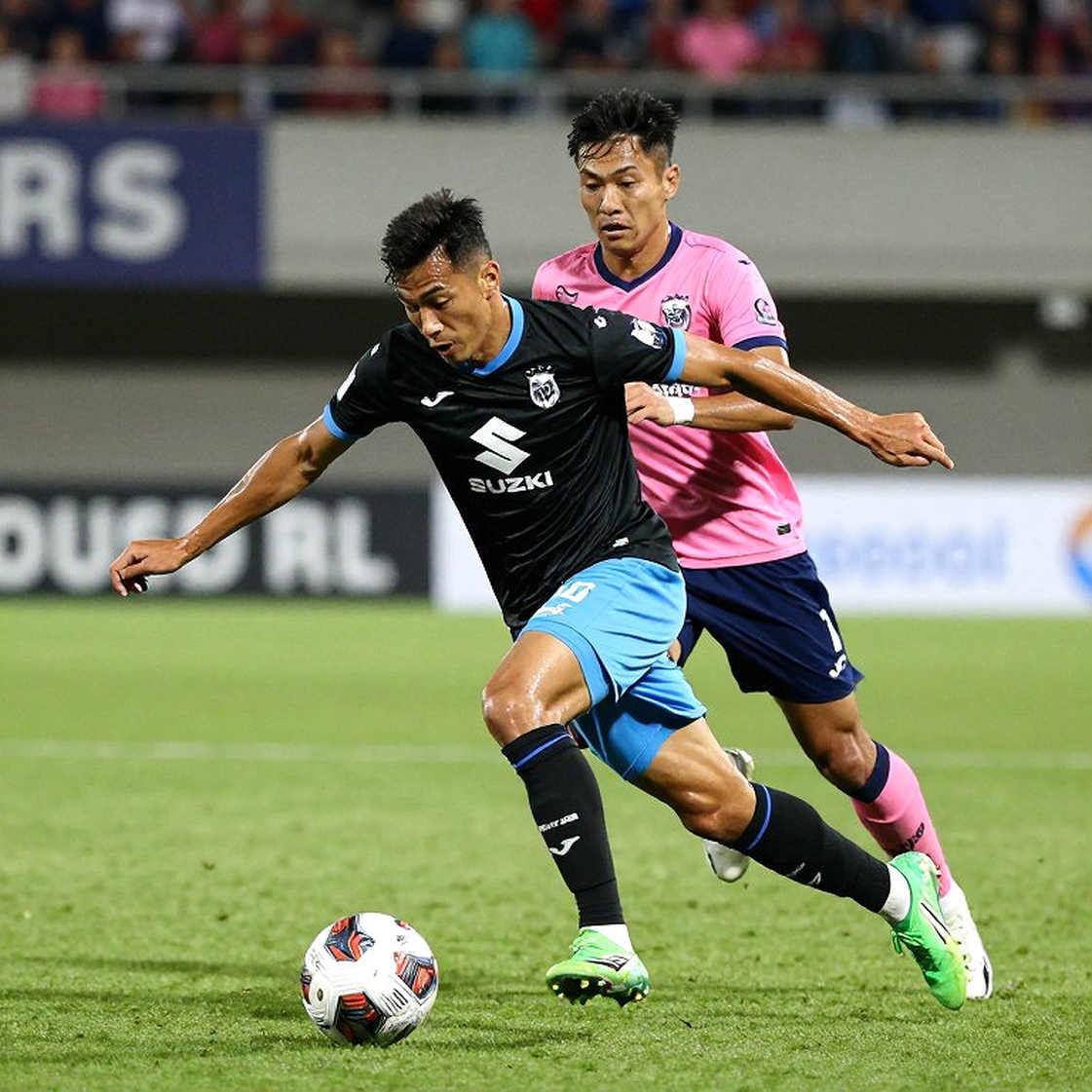
Bayern's tactical risk in this match does not lie in the deputy's shot-stopping; it lies in the fact that their system is structurally coupled to a specific goalkeeping function — and that function cannot be replaced by saying "he is also a goalkeeper".
Over years of watching Bayern live, I noticed a habit of observation: I do not count saves, I count the goalkeeper's touches outside the box. That number speaks to the height of the whole block. In matches Neuer starts, it is frequently at a level that draws attention; in matches he misses, it drops, and the back four drops with it. That is a subjective observation, not data, and I present it as what it is.
Mechanism Two: The Goalkeeper as a Numerical Plus-One in Build-Up
The second function is discussed less but lands squarely on the opponent's strategic weakness. In the build-up phase from their own half, a goalkeeper comfortable on the ball acts as a numerical plus-one against the opponent's first pressing line. An opponent who wants an effective press must commit players forward, and every committed player opens space behind. A good ball-playing keeper turns the opponent's pressure into the opponent's problem.
Arsenal press best in exactly this phase. They do not press by charging; they press by closing horizontal passing lanes and forcing a vertical ball with risk attached. When the opponent is a young goalkeeper with limited elite-level matches, the problem gains a further degree: deciding which vertical pass unlocks the first line becomes a psychological test, not merely a technical one.
This is why I consider judging Urbig purely on shot-stopping to be an assessment aimed at the wrong target. Shot-stopping is the least tested part of a Bayern goalkeeper's job, because Bayern dominate the ball and allow few shots. The most tested part is his feet and his decision-making under pressure — and that is precisely the part for which the source article offers no data.
The Musiala Problem: Losing a Block-Breaking Tool at the Worst Moment
In the same report, a second fact appears almost submerged: Jamal Musiala is out with a right thigh muscle tear, sustained three weeks ago, and Eberl says the player will return in October, eased back in slowly.
Placed side by side, the tactical picture becomes far clearer than either fact read alone. Musiala is a player with a very specific function: carrying the ball in the half-space, breaking an already-settled defensive block through close-space dribbling, and participating in three-man combinations between midfield and the final third. That is exactly the phase where possession teams most often stall against a well-organised mid-block.
In other words: Bayern lose the exact tool used to solve the problem Arsenal are best at creating.
Eberl's wording deserves closer reading than it usually gets. "Eased back in slowly" does not mean returning and playing as before. In sports medicine practice, the early phase of return typically comes with reduced explosive output and reduced maximum duels. For a player whose value lies in acceleration within tight spaces, that temporary reduction cuts precisely into the core value. The tactical loss therefore extends beyond the announced absence.
A team that loses its sweeper-keeper and its block-breaker in the same week does not lose two players — it loses two solutions to two phases of play the coming opponent intends to exploit.
The Overlooked Blind Spot: Command of the Six-Yard Box and Set Pieces
The report frames the issue as simply as possible: who starts. That framing skips a far more specific risk.
In modern football, set pieces are the phase where a goalkeeper's experience carries the highest weight. In open play, a young keeper can offset inexperience with reflexes and athleticism. At corners and wide free kicks, what is tested is starting position, the ability to read trajectory through a crowd, and the decision to come or stay — three things formed only through actual mistakes. No training drill shortens that road.
Arsenal are built to exploit exactly this gap. They generate organised set pieces, disrupting the goalkeeper's position by crowding the six-yard box and creating screening points that block sightlines. A twenty-three-year-old keeper, however many Bundesliga matches he has played, will face a type of pressure he has never met: pressure designed specifically for him, prepared over weeks, aimed at his precise experience deficit.
I rate this judgement at medium confidence, because it is inferred from the opponent's general profile and the keeper's age rather than from data in the article. But I put it first because it is the highest-probability risk and the least discussed one. Large risks are rarely loud risks.
Urbig: A Small Sample and a Public Valuation Event
Jonas Urbig is twenty-three and has started several matches for Bayern this season. That sample exists, but it is not a knockout-night sample under maximum pressure. Bayern beat RB Leipzig 6-1 with Urbig starting, and that is a positive signal. But a 6-1 scoreline is a high-variance event; it does not measure defensive stability, and it especially does not measure a goalkeeper's capacity in phases where his team does not control the game.
This is where I must state my methodological position clearly. A 6-1 win does not prove Bayern have goalkeeper depth. It proves that in one specific match, Bayern did not need their keeper to save them. Those are different claims, and confusing them is the most common reason clubs misprice their own assets.
Every Urbig start this season is not a match — it is a public valuation event for an appreciating asset.
Viewed financially, the structure here is the classic, healthy shape of a succession plan: an elite, high-earning, forty-year-old goalkeeper insured by a twenty-three-year-old deputy with a fraction of the cost base. The risk does not sit in the wage bill. It sits in asset-value timing: the club needs the successor's market value to appreciate before the incumbent's level declines, not after. Every Urbig start accelerates or decelerates that process.
This also explains why an injury report can be read as a financial report. Do not trust the announced number; trust the actual cash flow — and here, "actual cash flow" is the volume of elite minutes a twenty-three-year-old accumulates. That volume is an asset money cannot buy instantly.
The Contract Fork of a Forty-Year-Old Goalkeeper
Neuer is forty. At the goalkeeper position, forty is not a verdict; it is a state that demands different load management. But at the level of club governance, forty creates a fork no club can postpone indefinitely: extend, transition, or release. Each carries a different cost structure and a different communications risk.
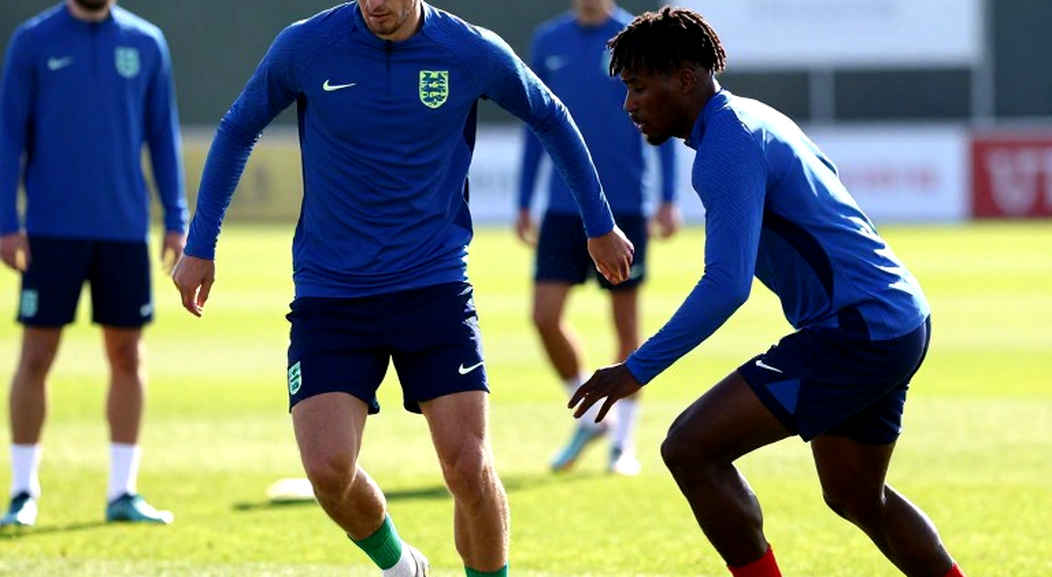
The report itself touches that fork without naming it. The phrase "questions about his long-term durability this season" is the media surface of an internal decision. When the framing shifts from "injury" to "durability", the discussion leaves the medical domain and enters the personnel domain. That is a hard shift to reverse, because every subsequent absence, however minor, becomes evidence reinforcing the new argument.
I do not describe football; I decode what football deliberately conceals. And what is concealed here is not the condition of Neuer's foot, but a negotiation about the future of the number one position running in parallel with the season.
The Opinion Cycle Is Running Ahead of the Sporting Facts
One detail in the report deserves slower reading: Neuer's absence became the dominant talking point despite the emphatic result against RB Leipzig. That is a clean example of a familiar phenomenon — narrative follows the name, not the result.
The mechanism is simple and hard to resist. When a team wins big, there is nothing to discuss. When that team wins big while its long-serving captain sits out, there is a story. The story generates its own demand, and that demand inflates the perceived severity of the situation. This does not mean the situation is not serious. It means severity is being measured with the ruler of news, not the ruler of medicine.
On Urbig's side, I rate his media handling as politically precise. Expressing hope that Neuer returns soon while asserting readiness when called is the correct posture for a deputy: claiming competence without claiming the shirt. That posture reduces dressing-room friction. It does not reduce reputational risk, because reputational risk comes from outside, not inside.
And here is the asymmetry worth naming: small sample, maximum visibility. If Urbig plays well against Arsenal, he receives credit that would normally take a season to earn. If he plays poorly, the label "not ready for this level" sticks and is hard to peel off, because the counter-sample is too small. That is the nature of reputational risk at the elite level: you are judged by your most-watched match, not your most representative one.
Why Bayern Can Rest Neuer Without Panic
One league-context factor must be priced in, and it is often skipped when analysing German injury reports.
The Bundesliga is a goalkeeper-producing environment. German clubs have a stronger tradition of developing keepers than the European average, and the consequence is that internal succession at the position is the normal path, not the exception. A German club using a twenty-three-year-old for a few big matches is not gambling; it is following its league's process. Bayern here follow the Bundesliga standard rather than break it.
The second factor is format. The single-table Champions League league phase gives every matchday direct weight on qualification, rather than absorbing results through a four-team group with two safe spots. In that system, a defeat is not just three points; it is a positional change on a flat table everyone can see. That is why a note on goalkeeper availability becomes a headline rather than a squad-list item.
Combined, the picture is fairly clear: Bayern have the foundation to turn an injury into an inconvenience, and the format pressure to refuse to treat it as a small one.
The Contrarian Angle: The Real Risk Is Not in Goal
So far everything has followed the familiar arc: first-choice keeper out, concern, deputy must prove himself. I want to invert that arc, because I think it puts the emphasis in the wrong place.
Start with a structural question: Bayern are built to minimise the number of actions their goalkeeper must intervene in with his hands. They dominate the ball, they push high, they suffocate opponents in the opponent's half. In a match following that script, the gap between a world-class keeper and a twenty-three-year-old is far smaller than public perception suggests. Bayern's real risk is not in the phases they control — it is in the phases where control breaks: corners, free kicks, and counterattacks against a line that has pushed too high.
In other words, Bayern's system shields the deputy in exactly the phases the public fears most, and exposes him in exactly the phases the public watches least.
The second contrarian point concerns the report itself. The whole story rests on one phrase: fluid in the foot. That is a symptom description, not a diagnosis. In sports medicine practice, symptom descriptions typically come with load management and imaging-based monitoring, meaning the timeline may be measured in days rather than weeks. But it also means the condition can recur under fixture congestion. Turning a symptom description into an indictment of a forty-year-old's durability is a logical leap supported by no fact in the article.
The third contrarian point is the one I most want to stress: what is genuinely being repriced this week is not Neuer's health, but Urbig's value. A club that gives a twenty-three-year-old goalkeeper several starts has invested in him through playing time. The Arsenal match is the first time that investment is tested in public at the highest level. The result will shape two decisions: whether Bayern need an experienced backup in the next window, and whether Urbig is regarded as a successor or merely a stopgap.
I do not describe football; I decode what football deliberately conceals. And what is concealed this week is an asset review conducted in public, under the cover of an injury report.
The Worst Case, and Why It Is Not a Catastrophe
Every analysis I write must pass through the worst case before it is published — not to frighten readers, but to test whether the argument survives when everything goes wrong.
Sporting worst case: Neuer does not recover in time, Urbig starts, Bayern drop their line to protect him, Arsenal exploit the space between midfield and defence, and a set piece decides the match. In that scenario Bayern lose points and lose control of the group.
Financial worst case: a dense fixture run causes the foot condition to recur, Bayern are forced to find an experienced backup in the winter window, and pay a premium for a player at the end of his career. That is the kind of cost clubs always pay more than expected, because they buy from a position of passivity.
Reputational worst case: Urbig has one poor match against Arsenal, the label forms, and the club must spend more resources protecting an asset that only needed time.
But here I must add what those who always choose the worst case tend to forget: not every uncertainty is a risk. Bayern prepared for this situation in advance. A club that already has a twenty-three-year-old who has started several matches, instead of calling up an academy keeper in an emergency, is showing a fully funded plan. The cost of the contingency was budgeted, not incurred. In financial language, this is a priced risk, not an unpriced one.
That is why I would bet Bayern come through this week without a major positional shift — and also why I think Urbig's value will move significantly, one way or the other, after the match.
What Will Actually Be Recorded After This Match
Victory on the pitch is the consequence of phone calls made twelve months ago. In this case, that call was the decision to let a twenty-three-year-old goalkeeper accumulate real minutes at a club with European title ambitions, rather than loaning him to a mid-table side to "gain experience" somewhere less risky. That decision was made long ago, and the Arsenal match is simply when it gets settled.
I am not predicting the result, and I do not need to. What interests me is a trace that will remain after the final whistle: whether Bayern keep their defensive line high with the first-choice keeper absent. If they do, it is a statement about faith in the structure and in the successor — and also a statement about how seriously the club reads Neuer's condition. If they drop the line, that is a different signal, and a more valuable one than any sporting director's quote.
A team speaks its beliefs through structure, not through press conferences.
Closing Point
Manuel Neuer's foot will heal. It is the kind of condition sports medicine handles, and a club like Bayern have the resources to handle it properly. The question is not when it heals, but what gets decided while it has not.
During that window, Jonas Urbig will get an opportunity a twenty-three-year-old goalkeeper rarely gets: to be assessed at the highest level, against an opponent designed to exploit the exact weaknesses of the young, in a format that does not absorb error. The result of that assessment will flow into a transfer decision, and that transfer decision will flow into another season.
The transfer market is like a chess problem; the contract is only the final mating move. In Munich, the move under consideration is not who to buy, but whether to buy at all. And the answer sits in the foot of a forty-year-old, in the hands of a twenty-three-year-old, and in a decision about defensive line height that nobody will record in the match report.
The question I leave readers with is not whether Bayern beat Arsenal. It is this: if Bayern win, and win without needing their goalkeeper to save them, have we learned anything more about their squad depth — or merely confirmed once again that in elite football, a handsome win is usually the most effective way to cover the questions still unanswered?