
Lyon and the Multi-Club Network: The Deal Is Decided Before the Ball Rolls
**Câu trả lời cốt lõi:** Sở hữu đa câu lạc bộ là mô hình một chủ thể kiểm soát nhiều câu lạc bộ ở nhiều quốc gia, cho phép luân chuyển cầu thủ và dòng tiền nội bộ. Lyon thuộc Eagle Football Holdings của John Textor, cùng Botafogo và RWD Molenbeek. Tháng 6 năm 2025, DNCG đẩy Lyon xuống Ligue 2; tháng 7 năm 2025, Lyon được phục hồi sau kháng cáo. **Dữ kiện chính:** - Điều 5 quy chế UEFA cấm hai câu lạc bộ cùng chủ thể dự chung một giải châu Âu. - Eagle Football Holdings của John Textor nắm Lyon, Botafogo, RWD Molenbeek và cổ phần Crystal Palace. - Botafogo vô địch Copa Libertadores và Brasileirão năm 2024 dưới Eagle Football. - Crystal Palace vô địch FA Cup 2025, buộc mạng lưới xử lý xung đột quyền sở hữu theo quy chế UEFA. - Nợ của OL Groupe từng được báo chí Pháp đưa tin ở mức hàng trăm triệu euro, gắn với chi phí sân Groupama Stadium. **Nguồn:** Tổng hợp báo chí Pháp (L'Équipe, RMC Sport) và quy chế câu lạc bộ UEFA, giai đoạn 2022 đến 2025. Ngày cập nhật: 31 tháng 7 năm 2025. **Hỏi đáp liên quan:** - Hỏi: DNCG là gì? Đáp: DNCG là cơ quan giám sát tài chính của bóng đá chuyên nghiệp Pháp, có quyền phạt hoặc đẩy câu lạc bộ xuống hạng vì lý do tài chính. - Hỏi: Vì sao John Textor phải bán cổ phần Crystal Palace? Đáp: Để tránh xung đột theo Điều 5 UEFA khi cả Lyon và Crystal Palace cùng dự cúp châu Âu. - Hỏi: Mô hình đa sở hữu ảnh hưởng gì tới đào tạo trẻ? Đáp: Học viện thường trở thành kho tích trữ tài năng, nơi cầu thủ được luân chuyển giữa các câu lạc bộ chị em để tối ưu giá trị thay vì lên đội một.
In June 2026, when the DNCG, French football's financial watchdog, announced an administrative decision relegating Lyon to Ligue 2, nobody in the corridors of Groupama Stadium was arguing about tactics. The only name repeated was one from Florida: John Textor, and his parent company Eagle Football Holdings. A few weeks later, Lyon regained its right to play in Ligue 1 on appeal, but the real question still hung over the city: who actually holds decision-making power at a club the fans thought they understood?
I have tracked the transfer market from Lyon for years, and the biggest lesson never came from blockbuster signings. It came from calls I was never allowed to hear directly, only retold by a trusted intermediary. The summer of 2026 was when the multi-club ownership network exposed its full frame, and when people realized that a deal in Ligue 1 could be decided in an office six time zones away.
To read the Lyon story, it must be placed on a wider map. Over the past decade, European football has seen the rise of groups owning several clubs at once. City Football Group expanded into a network stretching from Manchester to Melbourne, New York, Girona and Palermo. Red Bull built the Leipzig, Salzburg, New York and Bragantino chain. BlueCo holds Chelsea and RC Strasbourg. John Textor's Eagle Football Holdings gathered Lyon, Brazil's Botafogo, Belgium's RWD Molenbeek, plus a stake in Crystal Palace. This is no longer an isolated phenomenon; it is a new governance model, run on the logic of an investment fund rather than that of a supporters' association.
The legal frame for this model was set by UEFA in Article 5 of its club competition regulations: two teams under the same controlling entity cannot play in the same European competition. That clause explains why Textor had to consider selling his Crystal Palace stake when Lyon qualified for Europe. At national level, France's DNCG plays a different role: it does not care who owns the club, only whether cash flow covers wages and debt. These two layers run in parallel, and the gap between them is where large groups learn to move.
The multi-club model runs on three flows. The first is capital: money is pooled at group level and injected into each club as needed, like an internal bank issuing credit lines to branches. The second is players: a young talent can be bought by a smaller club in the network, accumulate value, then be sold to a bigger club in the same network at a higher fee. The third is brand and data: one scouting department, one analytics platform, one agent network shared across all teams. When these three flows align, an internal transfer stops being a transfer; it becomes a book entry.
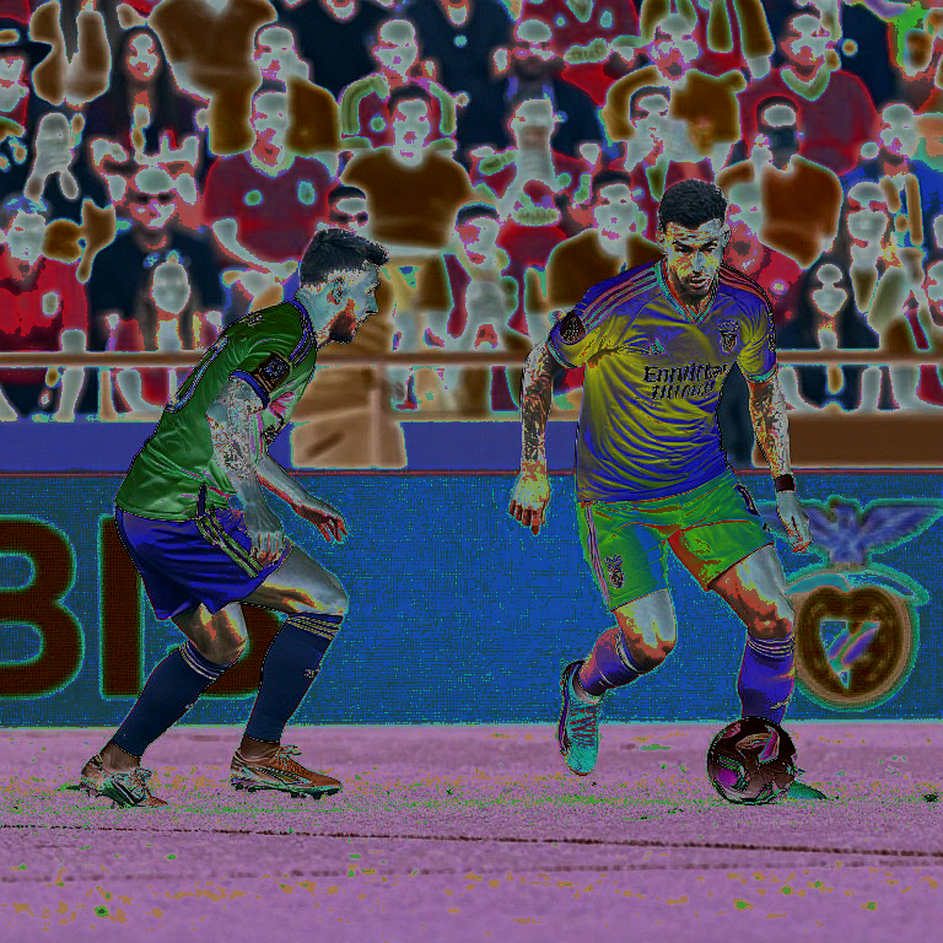
Lyon is the cleanest example of the second flow. Botafogo, under Eagle Football, won the Copa Libertadores and the Brasileirão in 2026. Soon after, the Brazilian club's key players became assets weighed against Europe, with Lyon as the natural destination inside the same ecosystem. What is called "selling players to balance the books" at Lyon is in fact a controlled internal circulation, where asset value is shifted between legal entities rather than created on the pitch. Fans see a striker leave; the accounts see a line item reallocated.
I have sat long enough in transfer rooms to know that market value is only the surface. What decides a deal lies in the structure: who pays upfront, who carries intermediary fees, how a sell-on clause splits, and most importantly, in whose financial statements the money appears. A club inside a network can buy a player at a sky-high price from its sister club, not because he is that good, but because the seller's balance sheet needs a flattering number before an audit deadline. The market never lies — only the source standing in the wrong place does.
At Lyon, financial pressure had built up for years before Textor arrived. OL Groupe's debt was reported by French media in the hundreds of millions of euros, tied to the cost of building Groupama Stadium and the wage burden of a club that once won seven straight titles. When Ligue 1's broadcasting revenue collapsed after the rights-negotiation crisis of 2026 to 2026, Lyon's model lost its most important pillar. This is the detail few outsiders care to face: the club did not fall because of an American owner, but because an entire revenue system had rotted before he arrived.
I look at the handshake, not the paper — because paper can be reprinted. In the Lyon case, the telling handshake was not between a president and a club, but between the parent group and the regulator. When the DNCG issued its ruling, what was negotiated was not a sporting outcome but a debt-repayment roadmap and a recapitalization. Lyon's reinstatement after appeal shows one simple thing: in modern football, the right to exist in the top flight is a financial variable, not a sporting achievement.
At the same time, Crystal Palace, where Textor holds a stake, won the 2026 FA Cup. That event forced the network to address the UEFA problem: if two clubs under the same controller both enter European competition, one must step aside. Textor's move toward selling his Palace stake shows that these groups are not bound by shirt colors; they are bound by regulation, and they optimize around it. Money pours into one place, but power moves along invisible threads.
The agent side sits inside this picture too. Super-agents keep relationships with both the group and the players, and they understand that a client at Botafogo can become a deal at Lyon faster than through any other route. Every rumor carries the fingerprint of the person who released it. When a rumor about an internal network transfer appears, the right question is not "is it true", but "who needs it to appear right now". A rumor can be used to inflate a price, reassure shareholders, or prepare opinion for a decision already signed.
The academy is the most underrated piece of the multi-club model. On paper, every group talks about developing young talent. But inside a network with many clubs, the academy becomes a talent warehouse rather than a path to the first team. A youngster trained at a big club's center who cannot break into the first team is pushed to a sister club to accumulate value, then sold if the price is high enough. The share of academy players who truly reach the first team at Europe's giants has long sat below ten percent, and the multi-club model only makes that number harder to see, because there are now more intermediate destinations hiding it.
At Lyon, young names like Rayan Cherki, Malick Fofana, Ernest Nuamah and Georges Mikautadze were once symbols of that policy. Some shone and left, some were moved on to balance the books. Fans saw player development; the group saw asset value rising over the holding period. In this model, the academy is not the club's heart; it is an investment portfolio with a holding period and an expected rate of return. This is what developing football nations, Vietnam included, must see clearly before copying the model.
The perspective of a Vietnamese professional working inside Europe helps me see another gap. Leagues like the V.League, with training centers such as PVF or the HAGL-JMG model, face the temptation of foreign capital. The question is not "is this group rich", but "what does the club retain within the group's power map". If the contract does not spell out where decision-making stays, a good academy can be turned into a transit station for a network half a world away.
Now comes the part the official story tends to avoid. The popular telling casts Textor as the villain: a foreign billionaire arrives, piles up debt, and nearly brings Lyon down. That telling is easy on the ear but hides a bigger blind spot. The blind spot is that the club had already lost the ability to sustain itself before the new owner arrived, because the whole league's broadcasting revenue collapsed and because French football's wage costs ran on the assumption that revenue would never fall. Multi-club ownership appeared as a capital solution to a disease that predated it.
A second blind spot runs against common intuition. People assume the multi-club model destroys sporting integrity. Reality shows it often stabilizes short-term cash flow: a group can move money between clubs so a weak club does not collapse, so players are not left unpaid, so the season does not break. The problem is not the model's existence, but that nobody asks the power question: who controls the players, who controls the data, and who is accountable when the network withdraws. Strategy is not about what to buy, but about knowing when not to buy. For smaller clubs, keeping self-determination is sometimes worth more than a large investment.
At the World Cup, people see goals — I see a network knotted in advance. Elite football runs on knots tied years earlier, in meeting rooms the audience never sees. The Lyon case is just one knot in a longer thread linking Florida, Lyon, Rio de Janeiro and Brussels. What is worth learning from it is not the fate of one club, but how a financial system can decide a sporting destiny before the referee blows the kickoff whistle.
What to watch in the coming months is not a specific deal but three signals. First, the DNCG's next decisions on Lyon, because they will show whether the recapitalization roadmap is substantive or merely a delay. Second, Textor's moves around the Crystal Palace stake, because they reveal which club the group prioritizes in the network. Third, the flow of players between Botafogo and Lyon in the next transfer window, because it is the most honest gauge of how integrated the network really is.
After the floor collapses, those who know steel rebuild from the rubble itself. Lyon has a good academy, a modern stadium and a city that understands football. Those things do not vanish when the balance sheet hits a crisis. The open question for every club at the same crossroads, from Lyon to teams in Southeast Asia, is whether they can keep self-determination before foreign capital turns them into a branch office. In a market where power moves faster than money, whoever holds the right handshake at the right moment writes the rules of the game.