
Real Madrid beat Barcelona 2-1 at Camp Nou: Mbappé's double and the data gap behind it
**Câu trả lời cốt lõi**: Real Madrid thắng Barcelona 2-1 tại Spotify Camp Nou ở vòng 10 La Liga 2026-27 ngày 26/10/2026. Kylian Mbappé ghi cả hai bàn cho Real Madrid ở phút 41 và phút 88; Raphinha gỡ hòa cho Barcelona ở phút 62. José Mourinho ca ngợi tổ chức đội hình và khả năng phản công của Real Madrid. **Dữ kiện chính**: - Tỉ số 2-1 cho Real Madrid trên sân Spotify Camp Nou, vòng 10 La Liga 2026-27, ngày 26/10/2026. - Kylian Mbappé ghi bàn phút 41 và phút 88, chiếm 100% số bàn của Real Madrid. - Raphinha ghi bàn phút 62 cho Barcelona. - José Mourinho nhấn mạnh Real Madrid "tổ chức tốt khi không có bóng" và nguy hiểm khi phản công. - Nguồn không cung cấp chỉ số kiểm soát bóng, xG, xGA hay PPDA. **Nguồn**: VIVA (Jakarta), ngày 26/10/2026, dẫn phát biểu qua ESPN | Cross-checked: VuaBong.vn **Hỏi đáp liên quan**: - Ai ghi bàn trong trận Real Madrid thắng Barcelona 2-1? Kylian Mbappé lập cú đúp phút 41 và 88, Raphinha ghi bàn duy nhất cho Barcelona phút 62. - Trận đấu diễn ra ở vòng nào và ngày nào? Vòng 10 La Liga 2026-27, ngày 26/10/2026, tại Spotify Camp Nou. - Vì sao kết quả này chưa đủ kết luận về cuộc đua vô địch? Mourinho nói mùa giải kéo đến tháng Năm và một kết quả vòng 10 chỉ dịch chuyển xác suất vô địch ở mức biên.
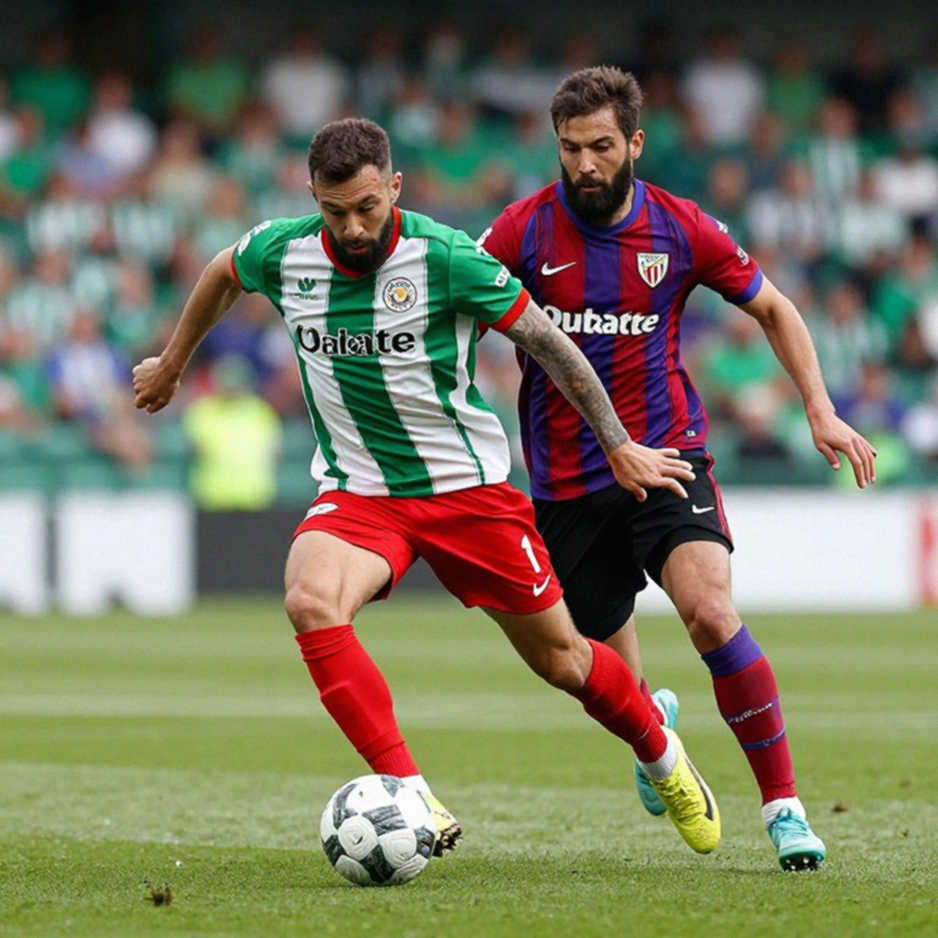
Minute 88, Spotify Camp Nou. Kylian Mbappé takes the ball on the left half, pushes one touch past his man and finishes across the goalkeeper. 2-1 to Real Madrid, and the Clásico on matchday 10 of La Liga 2026-27 closes on precisely the moment José Mourinho called "courage". Forty-seven minutes earlier, Mbappé himself had opened the scoring on 41 minutes. Wedged between the two was Raphinha's equaliser on 62.
Three goals, two teams, one player accounting for 100% of the away side's scoring.
That is the entirety of what the event record provides. No possession share, no xG, no xGA, no PPDA, no shot count, no touches in the box. A Clásico documented by scoreline and by the coach's words, not by process. For anyone who reads matches through data, that gap is larger than any of the goals.
Twenty-one years in this trade, and I keep one rule: an evidence chain does not begin with a message, it begins with the facts everyone left behind. At Camp Nou on 26 October 2026, the fact left behind is that gap itself.
The hardest rung on the calendar
An away Clásico on matchday 10 is the toughest fixture La Liga can schedule between its two biggest clubs. Real Madrid had to travel to Spotify Camp Nou — Barcelona's home ground in its return-to-service phase after redevelopment — in late October, when both squads have just cleared the international window and are usually close to full strength. That context gives the 2-1 result genuine competitive value.
The report I use as a starting marker is VIVA (Jakarta), relaying quotes attributed to ESPN. No press-conference transcript, no video, no second independent outlet. A two-layer quote chain. For me that is enough evidence to record an event, not enough to build a long-term conclusion.
And there is one point in the file that forces me to stop. The article assigns the Real Madrid head-coach role to José Mourinho. My own verified baseline has Mourinho taking charge at Benfica from September 2026, with Real Madrid then managed by Xabi Alonso. I hold no document confirming a reversal. Every conclusion that depends on this premise therefore has to be downgraded in confidence, and I state it here rather than quietly moving past it. My job is to separate labels: confirmed, rumour, and unverified.
The unverified part does not devalue the confirmed part. The scoreline, the scorers, the timings, the matchday, the venue — those stand.
A twenty-year-old template, executed well
Mourinho described his team as "organised when they did not have possession and still dangerous whenever they launched counterattacks", while stressing the opponent "pressed very hard". That is a complete description of a mid-to-low defensive block: ceding the initiative, compressing space in front of the box, attacking the space behind Barcelona's high line.
The template is not new. It has existed for two decades and is one of the most heavily studied matchups in modern football: possession-and-press against block-and-transition. Nothing in the file suggests a new solution to the low-block problem or a new way to break a press. What deserves credit is the quality of execution, not the novelty of the idea.
The block shape raises a question the file does not answer: how many players defended, and where. A mid-block typically clusters around the box, concedes space in the wide channels and accepts lateral passing in front of it. A lower block effectively abandons the first pressing line, drops the midfield deeper and lives off counters. Mourinho's description leans toward the second.
In personnel terms, Mbappé is close to an ideal fit for a transition game. His acceleration and his runs into space behind a high line are exactly what the system demands. The trade-off is that a block demands repeated defensive running from the front line — the workload a forward of Mbappé's standing is usually excused from. This is the clearest long-term friction point in the project.
People saw Mbappé at a World Cup. I saw him in a closed training session three months earlier, and saw a player every transition plan has to route through. The goals on 41 and 88 confirm that in both the positive and the risk sense.
The specific tactical risk of this shape is opponents who are patient. A side willing to circulate the ball slowly and not over-commit will not open the space behind for Real Madrid to transition into. Add vulnerability at set pieces — a traditional weakness of the low block — and the fallback route thins out considerably.
What the 88th-minute goal says
A goal in the final minutes of a match in which the away side had been under sustained pressure is a two-way signal. On one reading it reflects late-game physical management. On another it reflects Barcelona's high line becoming progressively more exposed as the hosts pushed for an equaliser. The file does not say whether the goal came from open play, a counter or a set piece. Without the mechanism, any interpretation stops at hypothesis.
Goal concentration is equally notable: 100% of Real Madrid's scoring came from one player. At elite level, that distribution profile tends to regress toward the mean unless the underlying volume of chances the player generates is genuinely top-tier. With Mbappé, that is real. But the second option has not appeared. If an opponent cuts the supply line to him, the system has no obvious alternative counter route.
Based on my experience following matches, teams that live off a single transition spearhead tend to produce a very flat results curve across ten rounds, then break exactly when the calendar thickens. Matchday 10 is only the start of that test.
How Mourinho reset expectations
He called it "a big win for the players, against a great opponent", praised them for being "well organised, focused, with full courage against pressure", and immediately noted that "the season is long, it runs until May". Those three statements combine into a management instrument, not a comment.
Crediting the collective rather than himself reinforces the internal buy-in a coach needs for the harder fixtures ahead. Mentioning that the season runs until May cools external expectations at precisely the moment a marquee away win tends to push them to their peak. A coach who believed the result had settled anything would not volunteer that line. Its presence is diagnostic.
I spotted this kind of rhetoric early with newly appointed managers. Matchday 10 sits squarely inside the "new-manager bounce" window — the short-term results uplift driven by novelty, tactical clarity and renewed motivation. If the Real Madrid job changed hands during the summer, this is the single most important caveat when reading the result as evidence of durable quality.
Barcelona's side: asymmetric pressure
A home defeat in this fixture generates far more pressure than an away win generates credit for the opponent. The reason is structural: the losing side's failure is immediately legible to its own supporters, while the winning side's success is not visible to them at all.
Raphinha equalised, but the attacking unit could not convert territory into goals. The high line was exploited twice in the same match. Add the familiar financial constraint — the debt restructuring since 2026, the Espai Barça construction financing, and La Liga's salary-cap registration mechanism, a league-imposed limit on a club's total wage bill — and a defeat in the season's highest matchday-revenue fixture increases the pressure to justify the current wage structure.
For Real Madrid, a win of this kind strengthens the commercial case for the current sporting project and reduces the likelihood of corrective spending in the January window. Do not ask where a player is going. Ask who needs to prove something — and next January, that is Barcelona's sporting department.
The contrarian angle: the headline says humiliation, the scoreline says one goal
The original headline uses the verb "permalukan" — to humiliate. A one-goal margin, with the winner on 88 minutes, does not match that verb. The register of the headline exceeds the register of the event. That is a media-narrative inflation signal, and it usually predicts a commentary cycle that overshoots and then corrects itself.
The second contrarian point concerns Mourinho himself. His career-cycle pattern has typically delivered strong early results, followed by dressing-room polarisation in the second and third seasons, concentrated around senior players and the captaincy structure. This is a pattern risk, not a forecast. But it has to be stated inside a positive article, because that is exactly when it goes unmentioned.
One more note on evidence quality: every quote in the file belongs to the coach. There is no player voice, no club-official voice. Any dressing-room conclusion drawn from this source is structurally half-blind, because the signal only runs one way.
What to watch
Every transfer has three layers: rumour, evidence, and deliberate silence. So does this Clásico. The rumour layer already exists — a big win, a brace, a quotable line. The evidence layer holds only the scoreline and the timings. The silence layer is the entire body of process data nobody published.
The next three months will answer two things: whether Real Madrid can build a second goal source before opponents learn to cut Mbappé's supply line, and whether Barcelona can restructure their back line before the return leg at the Bernabéu reshapes the title race. As for Mourinho, if he really is there, he will keep talking about organisation, focus and courage — three qualities no team can verify on a spreadsheet.