
The Back Three in V.League: A Shield for the Manager's Seat
**Core answer:** Hàng thủ ba người đang lan rộng ở V.League 1 mùa 2024/2025, nhưng phần lớn được dùng như một hàng thủ năm người phòng ngự thay vì một công cụ tấn công. Xu hướng này phản ánh tâm lý né rủi ro của huấn luyện viên hơn là sự tiến bộ chiến thuật. **Key facts:** - Số đội V.League khởi đầu với ba trung vệ tăng từ khoảng 3 lên gần một nửa giải trong hai mùa gần nhất. - Đội dùng hàng thủ ba người mà vẫn giữ PPDA thấp thường có cầu thủ chạy cánh trẻ và sung sức. - Hàng thủ ba người biến thành hàng thủ năm người khi hai cầu thủ chạy cánh lùi sâu. - Nhiều trận mùa 2024/2025 kết thúc 0-0 hoặc 1-0 do cả hai đội chọn phương án an toàn. - Một số câu lạc bộ ưu tiên mua trung vệ ngoại thay vì tiền vệ sáng tạo trong kỳ chuyển nhượng. **Nguồn:** Phân tích dữ liệu chiến thuật V.League 1 mùa 2024/2025 của Ngô Hà, ngày 13 tháng 8, 2026. **Hỏi đáp liên quan:** Q: Vì sao hàng thủ ba người phổ biến ở V.League? A: Vì huấn luyện viên muốn giảm rủi ro thủng lưới và bảo vệ vị trí của mình. Q: Hàng thủ ba người có giúp tấn công tốt hơn không? A: Chỉ khi đội có cầu thủ chạy cánh đủ thể lực lên xuống liên tục; nếu không, nó chỉ tăng số người phòng ngự. Q: Chỉ số nào cho thấy hàng thủ ba người đang phòng ngự thay vì tấn công? A: PPDA tăng vọt và số cú sút trúng đích thấp, theo dữ liệu V.League mùa 2024/2025.
In the match between Thep Xanh Nam Dinh and Cong An Ha Noi in the middle stretch of the season, I rewound one passage of play three times. The 71st minute, the score 1-1. Nam Dinh had just lost the ball in central midfield. Someone should have stepped up to press, but instead the whole defensive line dropped back at once. Three centre-backs closed into a tight block in front of the box. Two wing-backs vanished from the opposition half. Ten players stood behind the halfway line, waiting.
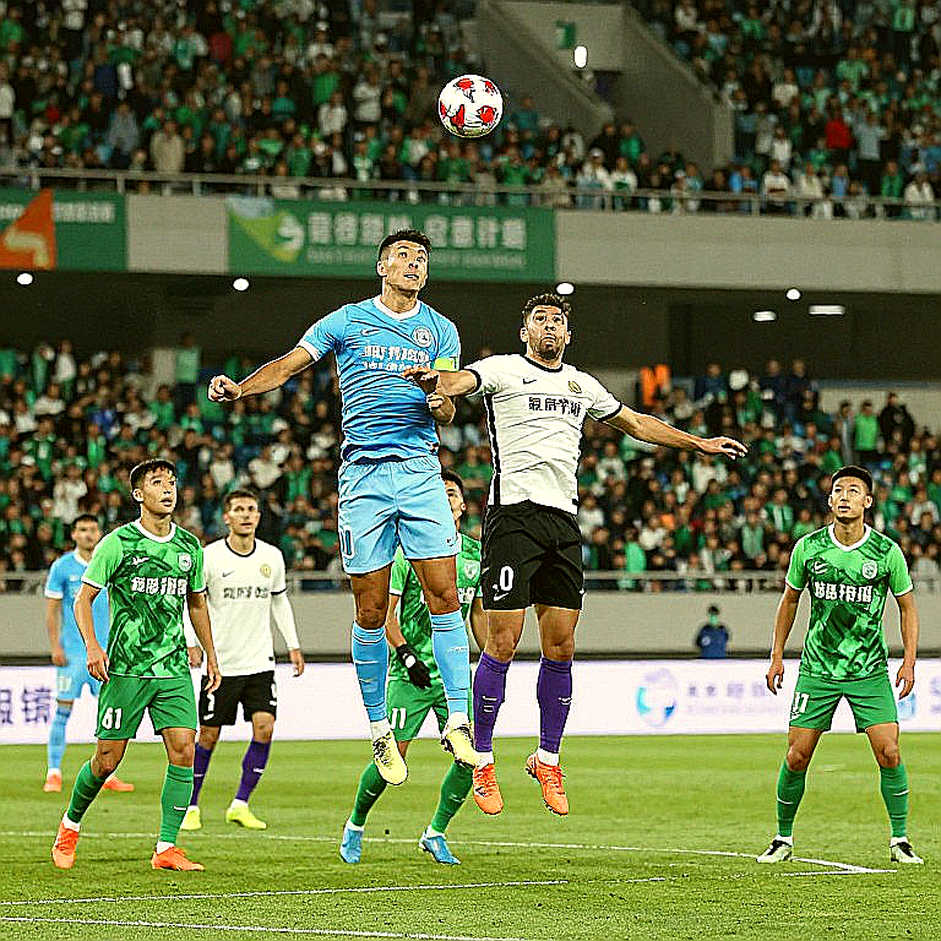
That passage of play repeats often enough to become a pattern. Numbers have no gender, only pressure applied in the right place. And in V.League 1's 2026/2026 season, pressure applied in the right place is pushing nearly half the teams toward the same tactical decision: building a back three.
To understand why the back three has spread so fast, you have to look at how the V.League operates. Our league has a crowded calendar, short breaks, and a hot, humid summer that can drain a player's legs within a few rounds. In those conditions, any system that asks a player to run the flank non-stop raises a question about sustainability.
Vietnam's football tradition is a back four. From generations of domestic coaches to big clubs like Hoang Anh Gia Lai and Song Lam Nghe An, the 4-4-2 and 4-2-3-1 have sunk into instinct. Vietnamese players are trained to understand their position within a four, where each centre-back knows who covers for whom and each wide midfielder knows when to drop.
Over the past three seasons or so, that current has shifted. A generation of young coaches, along with a wave of foreign experts bringing experience from South Korea and Japan, began experimenting with a back three. Thep Xanh Nam Dinh in their title-winning season, Cong An Ha Noi under foreign coaches, and even mid-table sides such as Binh Dinh and Ha Tinh have all had spells using three centre-backs as their main option.
The biggest push came from the national team's success in the regional arena. In early 2026, Vietnam won the ASEAN Cup after beating Thailand, with Nguyen Xuan Son as the focal point of the attack. Clubs quickly tried to copy the national team's formula, even though that formula was designed for a group of the best players, not for a club side with limited resources.
In Europe, the back three has a different history. From Serie A to La Liga, it has been a tool for teams that want to impose themselves on a match. The difference lies in the quality of the wing-backs. When a team owns a world-class wing-back, the back three becomes an attacking choice. When it does not, the back three becomes a defensive one. The V.League is leaning toward the second.
I grew up in Vietnam and worked for years in Spain, where I learned that the gap between a big club and a small one lies not in the budget but in whether the team dares to play football. In La Liga, even modest clubs believe they can hold the ball and attack. In the V.League, that belief is still fragile. The back three is one expression of that fragility.
What stands out lies elsewhere. The back three in the V.League is usually not used to attack. It is used to defend.
Based on my experience watching matches over the past two seasons, the number of V.League teams starting with three centre-backs has risen from about three to nearly half the league. But counting teams alone would miss the real story. The story lies in how that defence operates after the opening whistle.
In theory, a 3-5-2 or 3-4-3 lets a team control central midfield through numbers while opening the flanks through two wing-backs. In Europe, that is the weapon of teams that want to dictate. In the V.League, it usually turns into a five-man defensive line.
The mechanism is clear. When the team does not have the ball, the two wing-backs are forced to drop level with the three centre-backs to seal the spaces on either side. The back three instantly becomes a back five. If the team keeps dropping deeper, the midfield line is dragged back too, and you get a ten-man block compressed in front of the box. The ball is pushed wide, the opponent crosses, a centre-back clears. The match drifts by in identical passages of play.
Tactics are not magic; they are mathematics wearing a mask. The problem here is a problem of space. Three centre-backs occupy less central space than four, but to compensate they need two wing-backs operating as genuine wide midfielders. If those two cannot sustain the up-and-down, the back three loses its attacking meaning and only the defensive part remains.
I have measured PPDA, the number of opposition passes allowed before each defensive action, in several V.League matches this season. Teams that use a back three yet keep a low PPDA, meaning they still press high, tend to have young, energetic wing-backs. Most of the rest see their PPDA spike, meaning they let the opponent circulate the ball freely before they touch it.
This raises a question about rotation. In the V.League, a team can play three matches in eight days in the heat of June. A wing-back with enough stamina to go up and down for two straight matches is already lucky. By the third, he drops deep and stays there. The back three becomes a back five, and the back five becomes a wall with no door.
Here a familiar paradox appears. 612 harmless passes, but someone is drawing a map from them. Teams that defend with a back three often have a possession share that is not bad, sometimes high, yet their shots on target stay low. They keep the ball in harmless areas, passing back and forth among the centre-backs, and when they need to break through there are not enough players up top. Possession becomes a way of postponing the fear of being countered.
The 2026/2026 season has seen plenty of matches end 0-0 or 1-0. Many call that boredom. I see it differently. Eleven 0-0 draws are not boredom but an encrypted message. The message says both coaches chose the safe option, both believed one point mattered more than three risky ones, and both knew a heavy defeat could cost them their job.
Look at how clubs spend in the transfer window and the logic is plain. Some teams prefer to buy a quality foreign centre-back rather than a creative midfielder. They reinforce the defence but forget central midfield, where matches are actually decided. A transfer does not buy a player; it buys a hypothesis. The hypothesis being bought most in the V.League right now is a defensive one: with enough bodies at the back, we will not lose.
My experience watching matches shows the opposite is often true. When a back three is dragged too deep, the centre-backs gradually lose their judgment because they face too many situations in a short time. One small error in the 85th minute is enough to erase ninety minutes of stubborn defending. The team loses not for lack of centre-backs but because no one can hold the ball up top to relieve the pressure.
A central midfielder like Nguyen Hoang Duc needs teammates moving ahead of him to make the most of his passing. When the whole defence drops deep and only a lone striker remains up top, his best passes become meaningless. The back three, in this case, protects no one. It only smothers the most creative player in the team.
That is why I keep returning to an old story of mine. In 2026, when stadiums stood empty because of the pandemic, I studied Villarreal and found that the absence of a crowd made away teams drop deep on purpose, turning the home side's attacking phases into harmless ones. That lesson applies to the V.League. When a team no longer knows how to attack, adding another centre-back only makes it better at defending in defeat.
Behind every table of numbers are people sweating. Behind the decision to build a back three is a coach worried about his job, a board under pressure from the stands, and a squad that knows a single heavy defeat changes everything. The back three is an answer to a question about safety, not to a question about beautiful football.
Here I want to separate myself from the common reading. Many say the back three is a sign of modernisation, that the V.League is catching up with a European trend. Most cases in the V.League run the other way. This is a retreat dressed up in the language of advanced tactics.
The problem lies here: a back four is only pierced when the midfield fails to protect it. The right fix lies in pressing structure and midfield discipline, not in adding a centre-back. When a coach switches to a back three after a few goals conceded, he is treating the symptom rather than the disease. He hides the hole in midfield under a thicker layer of centre-backs, and pays for it with attacking power.
The irony is that this very caution creates a new risk. A team that only knows how to defend will not score enough to win, and in a league where the gap between teams keeps narrowing, three points against a direct rival matter more than one point won by shrinking. The safety a back three promises usually lasts only a few rounds, until the opponent finds a way to stretch the block and attack the space between centre-back and wing-back.
The back three will survive in the V.League, because it solves a real problem: how not to lose across a long, punishing season. But what is worth watching next season lies elsewhere: which team dares to hold the ball up top while the match is still undecided. Data will answer, as it always does, if only we are willing to read it.