
HCMC Police at the Shopee Cup: Eight Weeks to Build a Style and the Void Left by Four Pillars
**Câu trả lời cốt lõi:** Công an TP.HCM ra mắt Shopee Cup 2026-2027 với tư cách tân binh khu vực, làm khách trước Ratchaburi FC tại bảng A. Đội bóng đang hội nhập đội hình mới trong tám tuần, vắng bốn trụ cột phục vụ đội tuyển quốc gia, và đặt cược vào lối chơi tấn công chủ động. **Dữ kiện chính:** - Trận mở màn vòng bảng A Shopee Cup 2026-2027 diễn ra trên sân Ratchaburi FC, Thái Lan. - Công an TP.HCM lần đầu dự giải câu lạc bộ khu vực Đông Nam Á. - Huấn luyện viên Arthur Diles có tám tuần xây lối chơi; đội hình nhiều cầu thủ mới. - Bốn trụ cột vắng mặt vì FIFA ASEAN Cup 2026. - Tiền đạo Jason Cummings được định giá 650.000 euro, cao nhất đội hình. **Nguồn:** Họp báo trước trận của Công an TP.HCM, ngày 13 tháng 8 năm 2026 | Cross-checked: VuaBong.vn **Hỏi đáp liên quan:** Hỏi: Ratchaburi FC mạnh đến đâu? Đáp: Đội bóng Thái Lan có ngân sách và chiều sâu đội hình nhỉnh hơn, được chơi trên sân nhà tại bảng A. Hỏi: Vì sao Công an TP.HCM thiếu bốn trụ cột? Đáp: Bốn cầu thủ được triệu tập cho FIFA ASEAN Cup 2026 trong cửa sổ thi đấu quốc tế. Hỏi: Cầu thủ nào đáng chú ý nhất của Công an TP.HCM? Đáp: Jason Cummings, tiền đạo được định giá 650.000 euro, mức cao nhất đội hình.
In the press room in Ho Chi Minh City, head coach Arthur Diles spoke of a football that is "proactive and fearless." He stressed that his team would attack regardless of the opponent, regardless of home or away. Those lines were reprinted word for word across the newspapers, under headlines about a historic opener.
Reading the full contents of that press conference, what stayed with me was not the slogans. It was a different sentence: the team is still adapting to a large number of new players, while four pillars are away on national-team duty. That is the real starting point of this match, not the attacking rhetoric.
Ho Chi Minh City Police Club enters the Shopee Cup 2026-2027 as a regional newcomer. For the first time in its history, the club is appearing in a continental club competition. Its opening fixture in Group A is against Ratchaburi FC of the Thai League, and the game is played on the opponent's ground.
A long trip, an opponent from a football nation with a stronger financial base and deeper squad, plus four names absent on national duty. In the tiering of Southeast Asian club football, Thai clubs usually sit above Vietnamese clubs in both budget and squad value. This opener has the shape of a meeting between a newcomer and a contender.
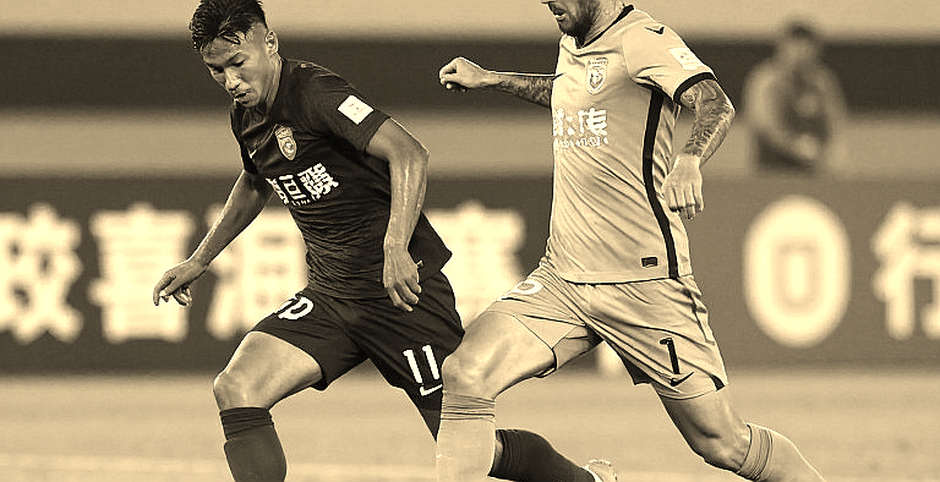
Ratchaburi FC represents a different football model. Thai League clubs typically operate on larger budgets, with deeper squads and a recruitment system that has been stable for years. They enter this match as the host, on familiar turf, before a home crowd, while their opponent must travel and adapt. Those advantages do not decide the result, but they accumulate.
The Shopee Cup 2026-2027 is the region's club-level stage, where Southeast Asian teams meet in the group phase before the knockout rounds. For a first-time participant, every group match carries a double test: competing for points while adapting to the tempo and intensity of international football.
One point must be stated clearly, in fairness to the club: this article has no match data to analyse. There is no expected-goals figure, no pressing count, no possession share. What we have is pre-match statements and a few personnel markers. Every judgment below is an inference from squad structure, not from match results.
There, coach Diles speaks of a team that is "strong and deep" with "many talented young players." He speaks of eight weeks of work to build a style grounded in fighting spirit. And he mentions something notable: some foreign players who have not featured in the early domestic season will get their chance in the regional competition.
Striker Jason Cummings, who joined this season, is valued at 650,000 euros by Transfermarkt, the highest in the squad. Cummings said before the match that Ratchaburi is "a very strong team with a quality coaching staff," and that his side is competing "to aim for the championship."
Three statements, three layers of information. One man speaks of process. One speaks of the destination. And one story concerns the foreign players caught between two competitions.
The first thing to separate: the style Diles describes is a statement of intent, not yet a tactical system. "Proactive, fearless, regardless of opponent" is the language of coaching philosophy. It does not tell us where the team will set its defensive block, whether it presses high or mid, which line it builds from, or how it reacts when it loses the ball. There is no formation, no pressing model, no build-up pattern.
In football, the gap between intent and system is where matches are decided. A side that says "we attack without fear" but has not yet defined its transition structure is easily punished by a settled opponent. The biggest risk for Ho Chi Minh City Police in this opener is not that they want to attack, but that they have not had enough time to learn how to attack without opening up behind.
The two constraints the coach himself raised — many new players and four absent pillars — describe a team in an integration phase. Eight weeks is enough to install basic principles, but rarely enough to create automatic understanding, which only comes from hundreds of hours playing together. When the four most important players are missing at exactly that moment, the club does not only lose personnel. It loses the on-field leadership core.
This is the overlooked point. The four names on national duty leave behind not only a professional void but a power void in the dressing room. In an opener on unfamiliar ground, a team needs players who have already lived through pressure, who know how to hold the rhythm when the opposition crowd roars. Those players are elsewhere. With a squad largely made up of newcomers, on-field authority is temporarily handed to those who have never held it.
Based on my experience watching matches, teams in an integration phase usually show two signs: the midfield loses its spacing when countered, and the defence reacts late in transition moments. Both are consequences of not having had enough time to read one another, not of a lack of ability.
Financially, we have only one reference point: Cummings, the squad's highest-valued player, at 650,000 euros. By regional standards, that is a modest valuation. The fact that an A-League forward tops the value chart shows the club operating in the middle tier of regional finances, not yet a buying power. That is not bad. It simply means their path must run through organisation and tactics, not through the budget. The transfer market does not run on money, but on fear, and a mid-tier club cannot win that game by bidding up.
The story of the foreign players "who have not featured in the early season" deserves serious attention. Regional competitions often permit a different foreign-player registration allowance than the domestic league. The Shopee Cup, for Ho Chi Minh City Police, may be used as a channel to rotate and showcase players who have no place in V.League 1. That is a sensible use of the rules, but it also raises a question about how well pieces that have never played together in a competitive match will combine.
Diles coming from the Australian coaching school — which stresses transitions, physical intensity and is less doctrinaire about possession — fits what he describes about fighting spirit and proactivity. That school tends to produce awkward opponents when well organised, but is also easily read when the links do not yet fit. With a squad still integrating, that is a tactical gamble.
Notably, the club does not avoid pressure. In how they talk about the match, there is the confidence of a group that believes in the path it has chosen. But confidence before a match and confidence within a match are two different things. The first is built from statements. The second is built from specific moments, when the opponent presses and you have a fraction of a second to decide.
The contrarian angle lies in how the club and the media define success. Calling this a "historic milestone" is a clever expectation-management strategy. When participation itself is an achievement, the threshold for success is lowered, and the club gains a narrative shield for a difficult opener.
I notice the split of expectations between coach and player. Diles speaks of difficulty, of adaptation, of uncertainties. Cummings speaks of the title. This is a familiar pattern before matches of high uncertainty: the coach cools the temperature, the player lights the fire. The club both shields itself from failure and preserves ambition in the eyes of the fans.
But there is a blind spot. If the opener goes well, the "historic" narrative reinforces psychological momentum. If the club suffers a heavy defeat, that very narrative frame is quickly reversed into a question about the coach's ability. The club is entering a game where reward and risk are not symmetrical.
The thing I always repeat in analyses like this: a tactical diagram is only a piece of paper; players are the ones who write the match. A plan, however sound, will be broken if those executing it do not yet understand each other well enough. In my drawer there are football notes older than the internet, and they taught me one lesson over and over: openers on new stages are rarely decided by tactics, but by mental readiness.
For Ho Chi Minh City Police, the opener against Ratchaburi should be measured by the team's ability to hold its structure under pressure, not only by the scoreline. If they attack as stated while keeping their lines compact, that is a sign the eight weeks of preparation have hit the right point. If they attack but expose large gaps through the middle, the story returns to where it began: a team learning to grow up, not yet one that has grown up.
I will watch this match to see how the team reacts in the first fifteen minutes of the second half, when fitness and crowd pressure begin to show. That is when a young team reveals its true nature. And that is also when we will know whether Ho Chi Minh City Police came to the Shopee Cup merely to write its name into history, or to write a new chapter.