
Ricardo La Volpe Changes the Channel on Simeone: The Line Between Football Philosophy and Aesthetic Bias
**Câu trả lời nhanh:** Ricardo La Volpe tuyên bố đổi kênh ngay khi xem đội bóng do Diego Simeone dẫn dắt vì không thích lối chơi phòng ngự phản công, đồng thời khen Lionel Scaloni đã xây dựng triết lý bóng đá cho Argentina và khen sự chuyên nghiệp của Lionel Messi. **Sự kiện chính:** - La Volpe phát biểu trên De Sports, nói không xem các huấn luyện viên chuyên phản công. - Ông bày tỏ mong muốn Scaloni tiếp tục dẫn dắt đội tuyển Argentina. - Ông khen Messi duy trì đẳng cấp ở tuổi ngoài 35 và tham dự World Cup. - Argentina đã ba lần vô địch World Cup: 1978, 1986 và 2022. - Phát biểu không kèm dữ liệu xG, PPDA hay phương án chiến thuật thay thế. **Nguồn:** Goal.com, dẫn lại phỏng vấn trên De Sports. Ngày công bố không xác định trong tài liệu nguồn. **Hỏi đáp liên quan:** Q: Vì sao La Volpe chỉ trích Simeone? A: Ông nói không thích lối chơi tập trung phòng ngự phản công và đổi kênh khi xem. Q: Messi có tiếp tục thi đấu quốc tế? A: Chưa có xác nhận chính thức; đây là biến số đang được theo dõi. Q: Argentina vô địch World Cup mấy lần? A: Ba lần, vào các năm 1978, 1986 và 2022.
HOOK
It was three in the morning in Shenzhen, and I was replaying footage of an Atlético Madrid match in which the visiting side had held close to seventy percent of the ball. Atlético's only goal came in the 78th minute, from a counter-attack of three passes. My hand was already on the off button. So when Ricardo La Volpe said on De Sports that he immediately changes the channel every time he watches a Diego Simeone team, I understood the feeling. The 2026 World Cup winner made no secret of his irritation: he said he does not watch coaches who focus purely on counter-attacking. In the same interview, he praised Lionel Scaloni for having built a footballing philosophy, and praised Lionel Messi for his professionalism at an age when most peers have retired. One provocative line, two compliments, three names. What was left blank is the hardest part: where personal taste ends and tactical analysis begins.
CONTEXT
La Volpe is no outsider. He is a former goalkeeper from Argentina's 2026 World Cup-winning squad, a former Mexico manager, and a well-known advocate of proactive, possession-based football built from the back. He is also a familiar pundit voice in Spanish-language media. His view on Simeone therefore did not appear in a vacuum: the two men share a tense personal history, with a milestone widely referenced in coverage being a 2026 Estudiantes versus Boca Juniors fixture. When a statement is shaped by personal history, delivered on a media platform, and then packaged into a headline, it has to be read on two levels: the opinion layer and the fact layer.
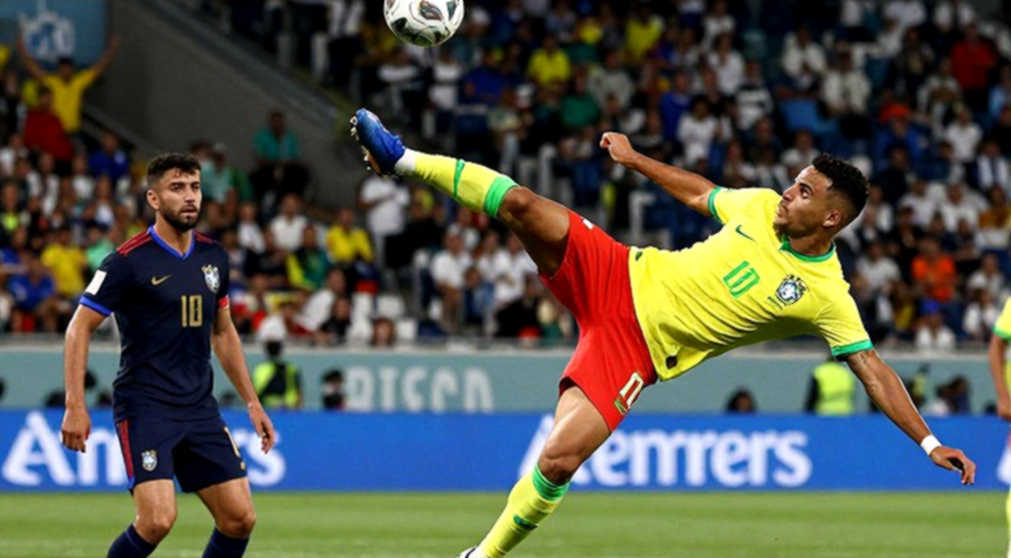
On the other side, Atlético Madrid under Simeone has become a team organised around a low defensive block and rapid transitions, often operating in a hybrid between a 4-4-2 and a 5-3-2 without the ball. The squad has been assembled over many years for exactly that style: high running volume, discipline, and the ability to absorb pressure. It is a model that has delivered trophies and has become the identity of a club, not a temporary experiment.
Scaloni's case is different in kind. He inherited an Argentina side in an identity crisis after several disappointing major tournaments, had to change the approach of an entire generation of players, and rebuilt both the squad and the playing model. Argentina have won the World Cup three times — 2026, 2026 and 2026. La Volpe's wish for Scaloni to continue carries a continuity signal rather than a tactical verdict.

CORE ANALYSIS
Read closely, the three statements are not the same kind of thing. The praise for Scaloni describes a project: replacing a generation, building an identity, winning trophies. The praise for Messi describes an individual who has maintained his level at an age when speed and recovery usually decline. The criticism of Simeone — the only part pushed into the headline — comes with no formation diagram, no metric, and no alternative proposal. No xG. No pressing counts. No possession share. It is a purely aesthetic judgement. Counter-attacking from a low block is a globally tested model; calling it outdated reflects the commentator's taste more than competitive reality.
I arrived at that conclusion by a roundabout route. In 2026, working as a field reporter at the U20 World Cup in South Korea, I mis-stressed the name of a French striker three times in one half and had viewers call in to complain. From then on I set a rule: check three times before you speak. The pitch never lies – it was only ever me who misheard a name. That rule applies just as much to judgements about style. If I have no data to call a system outdated, I have no right to say it.
In 2026 I wrote a controversial piece arguing that France won the World Cup in Russia without a genuine centre-forward, that Olivier Giroud was merely a mobile decoy, and that a defensive counter-attacking system is what lifted the trophy. The piece was heavily contested, then gradually accepted after the 4-2 win over Croatia. The phantom number 9 does not exist on the pitch, but it lifts the trophy. The lesson I took was this: a system criticised on aesthetic grounds can still be the most effective system in terms of results. Those two things are not measured with the same ruler.
Based on my experience covering matches, the problem lies in the way process data and results data get mixed together. A low-block team usually posts a low possession share, yet its expected goals per shot in transition can match or exceed the opponent's. Had La Volpe presented that number and argued it was insufficient, the debate would sit on a different level. Instead he offered an action — changing the channel. That is a viewer's right, but it cannot be used as evidence when evaluating a coach.
In the other direction, La Volpe's praise of Scaloni is also somewhat idealised. Argentina's 2026 World Cup win was not achieved through possession alone. They won with a balanced structure, the ability to suffer when required, tactical fouls at the right moments, and reliance on one individual at decisive moments. Calling that a footballing philosophy sounds better than calling it organised pragmatism, but operationally the two descriptions sit closer together than people assume. Setting Scaloni against Simeone is a storytelling device, not a technical comparison.
One further detail is worth noting: La Volpe referenced Messi playing for his club in a regional North American competition, against Cruz Azul. That detail shows a superstar's pull still expanding into new markets, but the specific competition and timing need to be verified against official sources before being used as a fact.
CONTRARIAN ANGLE
Where I might be wrong: defending Simeone too quickly becomes a reflex. The low block has a ceiling. When a club has top-tier resources and squad value, deliberately choosing a permanently reactive posture is a decision that can be criticised through argument, without appealing to taste. A team that cannot control the ball in big matches will always leave its fate dependent on a handful of moments — a corner, an opponent's mistake, an individual flash. That risk is real, and it is measurable.
I may also be wrong to underweight La Volpe's words. He played at the top and managed at the top. Lived experience is not data, but it is a weak form of evidence that still deserves a hearing. If hundreds of matches showed him that a certain model cannot go far, his counter-argument cannot be dismissed simply because he offered no metric.
The more troubling issue is the content-production mechanism. A former coach says something vivid, an outlet packages it into a headline featuring words like "slap" and "change the channel", and within hours the discussion shifts from tactics to emotion. Former coaches can shape public tactical discourse while bearing almost no accountability for data. That is an industry gap, not the fault of any one person.
And one easily missed detail: the only part of the interview with real consequences is the least noisy part — Messi's international future and the possibility of Scaloni continuing. Those are variables that affect a national team's transition planning, not remarks about viewing preferences.
TAKEAWAY
This debate will not be settled by taste, because taste has no finish line. It can only be settled by what neither side has offered: match-level process data, tracked across multiple seasons, enough to separate a system that is disliked from a system that has run dry. The silence after the whistle is the paragraph I most enjoy writing — because that is when every headline must give way to the scoreline. What matters now is watching whether Scaloni continues, and whether Messi plays one more World Cup. The true value of a footballing style, in the end, is measured by what it leaves behind once people stop arguing about it.